
NetSuite Customization Demystified: How to Leverage the SuiteCloud Platform for Custom Solutions
NetSuite’s powerful customization tools allow you to tailor the platform to meet your specific business needs. With features such as SuiteBuilder for...
9 min read

Maximizing NetSuite ROI does not stop at implementation. It depends on the support model behind the system once day-to-day issues, enhancement requests, and performance demands begin to build. That is why the decision matters more after go-live than many teams expect.
In Panorama Consulting Group’s 2026 ERP Report, 42.1% of organizations that sought third-party guidance said they needed help with post-implementation and benefits realization. This blog compares NetSuite Advanced Customer Support (ACS) and Kimberlite’s DiamondCare to help businesses evaluate which option is better suited for long-term ERP success.
This guide covers:
Compare ACS scope, response models, and ownership gaps
Spot where support costs hide beyond subscription fees
Decide when to audit, switch, or expand support
Kimberlite Partners works with NetSuite teams that need clearer ownership across administration, enhancement work, and system performance, often beginning with a NetSuite Health Check or ongoing NetSuite Support Services.
Support options can look similar at renewal time, but the practical differences show up quickly in day-to-day execution.
|
Evaluation Point |
What To Confirm |
|---|---|
|
Specialist Access |
Determine whether you get named consultants or a rotating queue. |
|
Support Scope |
Confirm coverage for workflows, scripts, searches, forms, and reporting. |
|
Integration Coverage |
Ask who owns the connector issues, mapping changes, and monitoring. |
|
Issue Prioritization |
Review how urgent fixes are separated from the enhancement backlog. |
|
Total Cost |
Include internal coordination time, delays, and out-of-scope work. |
|
Performance Review |
Look for proactive system review, not ticket-only support. |
NetSuite Advanced Customer Support (ACS) is a comprehensive, subscription-based service that goes above and beyond to provide extensive guidance and support for businesses using NetSuite. With its annual subscription, businesses gain access to NetSuite Direct Professional Services, which are essential for a smooth NetSuite implementation and customization process. ACS plays a crucial role, particularly for businesses handling multiple projects each year, by offering specialized support that surpasses the standard offerings of the NetSuite Direct implementation team.
There are numerous advantages to subscribing to ACS. One major benefit is that businesses only receive a single, all-inclusive bill each year, making budgeting and financial management much simpler. Another advantage is the potential for a high return on investment, especially for organizations that handle multiple projects simultaneously. ACS also offers specialized support that improves problem-solving efficiency and guarantees reliable and top-quality assistance from experienced project managers throughout the entire subscription period.
However, there are certain drawbacks associated with ACS. The cost of the subscription may not always align with the value received, especially when usage is low. Additionally, there can be inconsistencies in the level of expertise, particularly when it comes to customization and advanced functionality. Moreover, companies need to allocate internal resources to manage ACS projects, which can potentially strain operational efficiency. Furthermore, there may be challenges in receiving timely and personalized attention, and in some cases, ACS may push unnecessary add-ons and modules, thereby complicating the NetSuite implementation process and increasing costs.
The important comparison is not just what ACS offers on paper, but how consistently that support maps to your live workflow, reporting, integration, and business management requirements once the system is under real daily load.
A renewal decision should come from evidence inside your current NetSuite system, not from assumptions about premium support. Before you extend a NetSuite ACS agreement, review the operating details that show how the support model has actually performed for finance, IT, and administration teams.
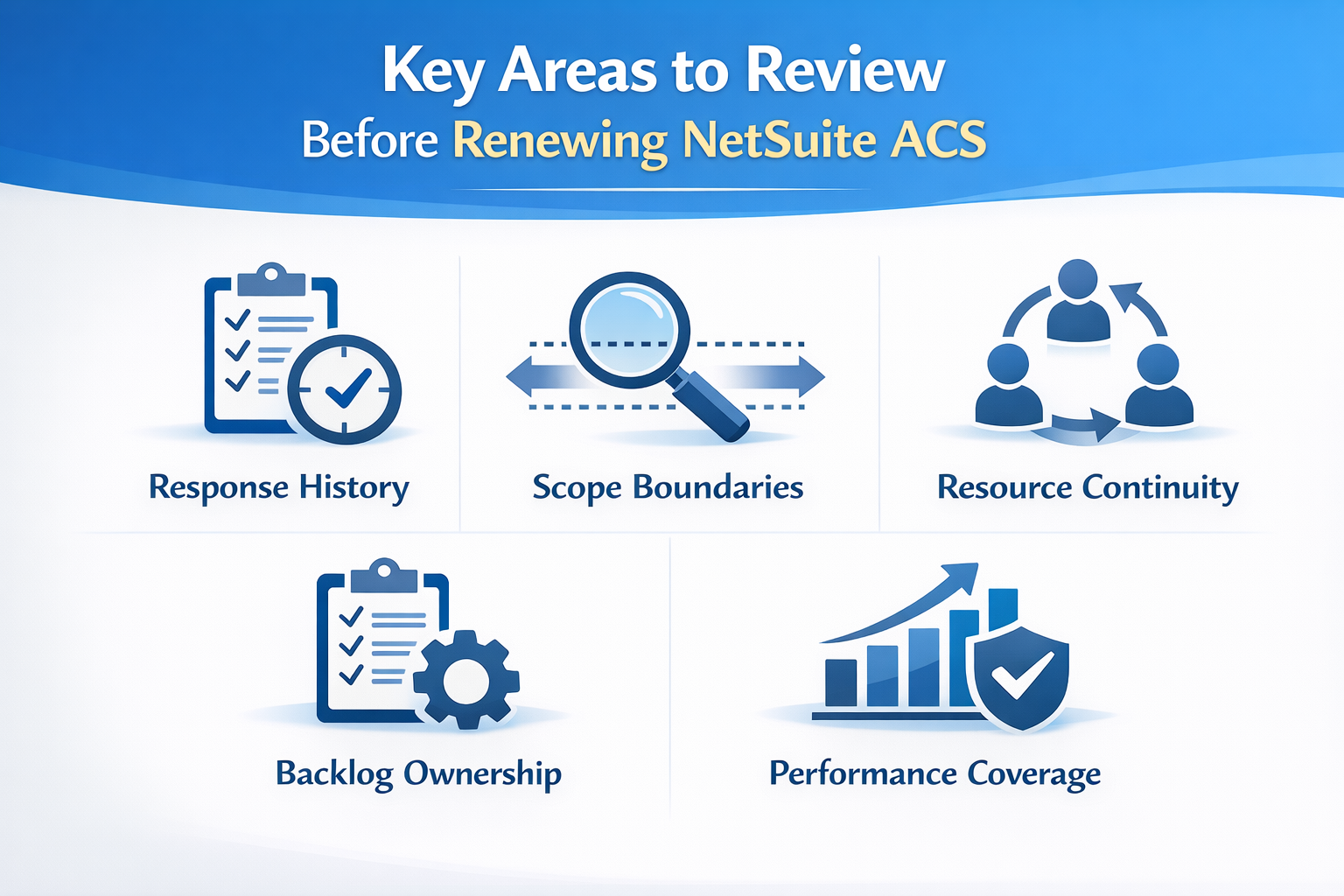
Response History: Review recent ticket resolution times, reopened issues, and escalation records so you can compare contract expectations with actual support delivery.
Scope Boundaries: Confirm which requests count as supported administration work and which move into separate consulting, customization, or module charges.
Resource Continuity: Check whether the same people will stay close to your account or whether knowledge resets each time work moves between teams.
Backlog Ownership: Understand who prioritizes workflow changes, reporting fixes, and enhancement requests once several business units are competing for attention.
Performance Coverage: Verify whether the support model includes review of searches, scripts, dashboards, and transaction-heavy processes, or only reacts after users report slowdown.
Some buyers also ask about access to ACS playbooks. That can be useful, but the more important question is whether the provider leaves your team with usable best practices, clear documentation, and enough admin enablement to handle recurring work without reopening the same issues.
Read Next: NetSuite Support vs Consultant: Which One Delivers Better Results?
NetSuite ACS alternatives should be evaluated as operating models, not as marketing labels. For many enterprise teams, the real issue is whether the support structure matches the pace of change inside the business. That means comparing who owns the work, what technical areas are covered, and how the provider handles ongoing improvement inside the NetSuite system. It also means separating a support problem from a broader ERP platform decision.
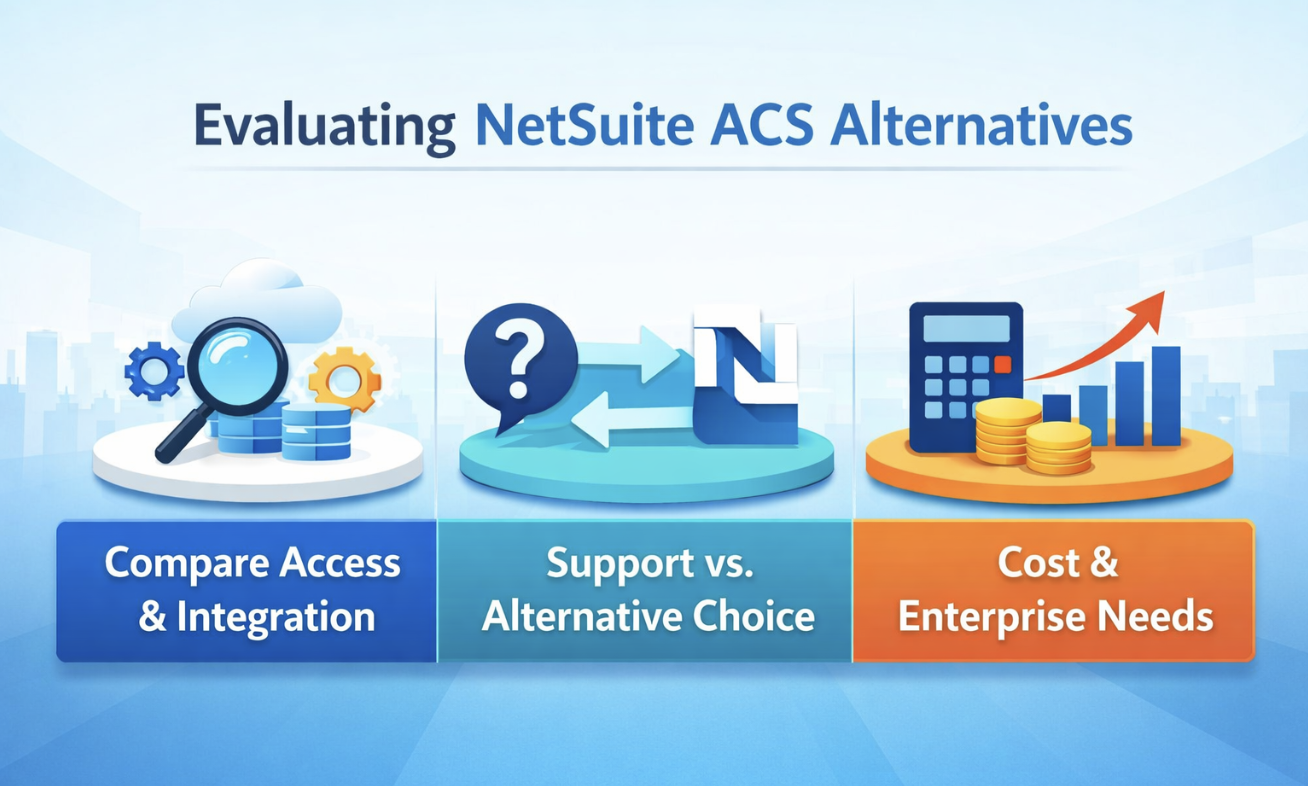
The first comparison point is access to the right specialists. If your team needs help across administration, saved searches, reporting, scripts, integrations, and approval workflow changes, you need to confirm whether one provider can cover that scope or whether work will be split across separate queues and separate budgets. A strong alternative should make it clear how requests are routed, who can handle complex configuration work, and how integration issues are owned once they affect daily operations.
This matters most in enterprise-level environments where the NetSuite support model has to cover more than ticket response. It often needs to support e-commerce connections, role changes, financial close adjustments, search tuning, data fixes, and release readiness without forcing the internal team to coordinate multiple vendors for one software solution.
A slow or rigid support experience does not automatically mean you need an alternative to NetSuite. If finance, operations, and reporting are already working well inside Oracle NetSuite, the better question may be whether you need different support options rather than a move to NetSuite competitors such as Sage Intacct, Microsoft Dynamics 365, Certinia, Oracle Fusion Cloud ERP, or Infor CloudSuite. A change in support model is usually less disruptive than replacing the core enterprise resource planning platform, especially when the current cloud ERP system already fits your business model.
The subscription price is only one part of the total cost of ownership. You also need to account for internal coordination time, delayed enhancement work, unresolved performance drag, and the separate spend that appears when customizations or reporting changes fall outside the support model. This is where a structured review, such as a NetSuite Health Check, becomes useful, because it shows whether your support needs are really about capacity, system design, or broader performance issues inside the existing environment.
ERP pricing comparisons also need context. A lower support fee can still become the more expensive option when your team spends more time managing handoffs, waiting on answers, or paying separately for work that should have been part of the original support structure.
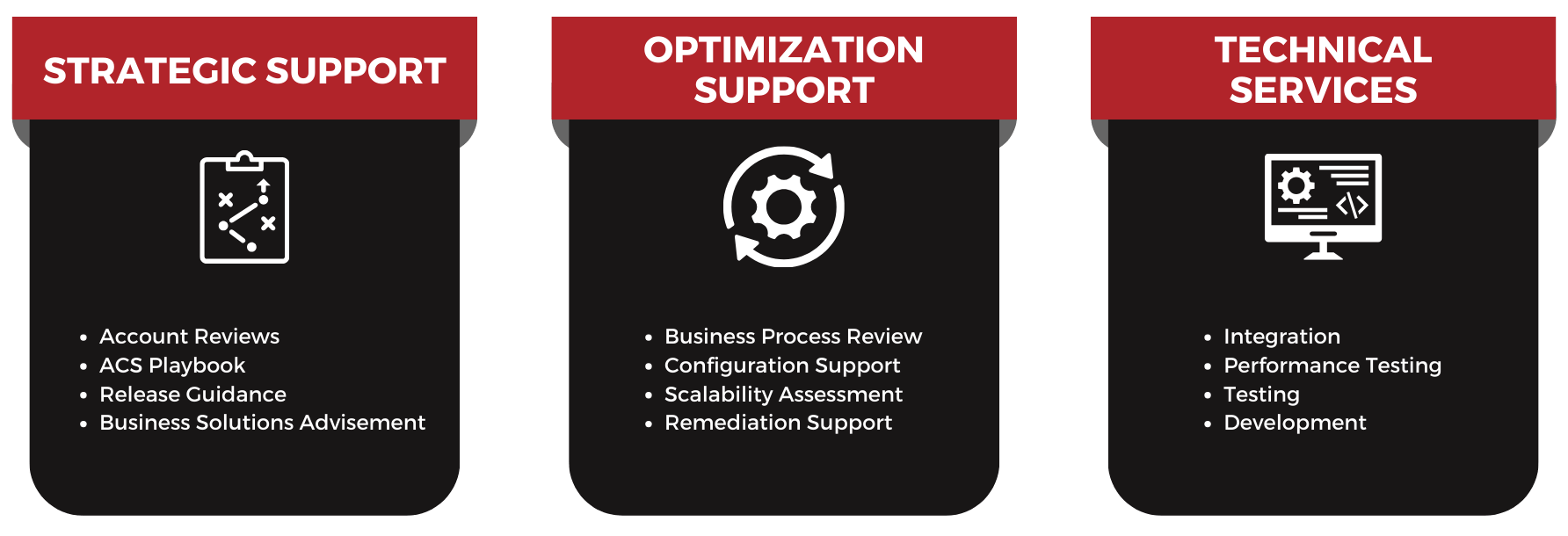
A complete NetSuite support model should extend beyond ticket resolution. It should provide structured coverage across strategic guidance, system optimization, and technical execution. This is where many NetSuite ACS alternatives differentiate themselves.
Companies often blur two different decisions together: finding the right ERP and finding the best NetSuite support model for their current environment. Oracle NetSuite is a comprehensive ERP solution for many mid-market and enterprise teams, so the first question is whether the ERP software still fits your business needs, reporting requirements, and operating model. The second question is whether the current support structure helps the system keep pace with evolving business processes, business growth, and customer success expectations.
If your core issues are slow change execution, weak ownership, limited customization support, or poor follow-through on enhancement work, the right NetSuite alternative may actually be a different support partner rather than a different ERP solution. That is especially true for organizations with complex finance, cross-functional workflow dependencies, or one platform expectations across finance, operations, and reporting. A support change is often the cleaner alternative solution when the software itself is still doing the job.
Some teams do need to evaluate NetSuite competitors, especially when business needs have shifted enough that a support change will not fix the underlying fit. In those cases, evaluating NetSuite competitors should focus on operational fit first and vendor positioning second. The right ERP should match transaction complexity, reporting depth, industry-specific requirements, and the workflows that matter most to finance, operations, and IT.
Among cloud ERP options, Sage Intacct is often considered by companies focused on cloud-based financial management. Microsoft Dynamics 365 Business Central is commonly reviewed by SMBs that want a broader business management platform, while Microsoft Dynamics 365 Finance is more often evaluated for larger or more complex enterprise requirements across finance and HR. Certinia, formerly FinancialForce, is often part of the conversation for services organizations that want professional services automation on the Salesforce platform. Oracle Fusion Cloud ERP typically enters the discussion for organizations that need wider enterprise coverage, and Infor CloudSuite Industrial is a common option in manufacturing and distribution environments where supply chain management is central. Some buyers also compare SAP Business One, but they should distinguish between hosted ERP software and a true multi-tenant cloud model.
Those differences matter because the right NetSuite alternative depends on what the business actually needs the platform to do. A financial management platform built mainly for accounting will be evaluated differently from an ERP solution expected to cover supply chain management, e-commerce, finance, and HR, or industry-specific execution in one platform. The strongest comparison process looks at software solution fit, implementation implications, reporting depth, and long-term support structure together rather than treating top NetSuite competitors as interchangeable.
Read Next:
NetSuite vs Sage Intacct: Key ERP Differences Buyers Should Know in 2026
As a compelling alternative, Kimberlite's DiamondCare offers a flexible subscription-based program that grants NetSuite users direct access to a team of experienced project managers and consultants. These experts provide a wide range of services tailored to the unique needs of each business. Interestingly, Kimberlite Partners, formerly known as Demand Solutions Group (DSG), was the original pioneer behind NetSuite ACS before NetSuite acquired DSG. It is safe to say that Kimberlite, through its DiamondCare program, holds unmatched knowledge and understanding of the pitfalls associated with NetSuite ACS.
Kimberlite's DiamondCare shines as a standout option in the realm of cost-effective NetSuite support alternatives. Operating on a subscription basis, it offers outstanding value and the predictability of support costs. With Kimberlite, businesses receive personalized attention from dedicated consultants, optimizing their usage of NetSuite while enabling a higher return on their NetSuite investment.
Kimberlite sets itself apart by providing a comprehensive array of NetSuite services that cover everything from on-demand NetSuite administration and NetSuite customization to development, system integration, and performance optimization. Kimberlite's approach not only aligns NetSuite with the unique business processes of each organization but also empowers data-driven decision-making through insightful reporting and analytics. Moreover, their NetSuite Health Check feature is designed to identify any performance issues and offer tailored recommendations for optimal system health.
Organizations that need a broader managed service model can compare NetSuite Managed Services, NetSuite Support Services, and a targeted NetSuite Health Check based on the actual mix of administration, optimization, and performance work they need to cover.
The most useful support model is the one that reduces decision lag inside the business and keeps NetSuite aligned with current operating needs. Kimberlite's approach is most relevant when teams need practical coverage across system stability, enhancement work, and performance review.
System Review: A health check can identify overloaded searches, dashboards, scripts, and workflows before those issues create daily friction for users.
Support Continuity: Ongoing support helps maintain context across recurring finance, reporting, role, and workflow requests instead of treating each issue as a new case.
Managed Prioritization: A managed service model helps teams rank fixes, enhancement requests, and integration work by business impact and urgency.
That support structure tends to matter most for teams managing ongoing customization, administration, and release change in a live Oracle NetSuite environment. It is particularly relevant when internal admins need a partner that can support business growth without losing control of priorities, documentation, and day-to-day execution.
Read Next: Why Every Struggling Customer Needs a NetSuite Health Check
Choosing between NetSuite ACS and Kimberlite Partners’ DiamondCare comes down to how well your support model aligns with your business needs. If your team needs stronger ownership, faster execution, and broader ERP support, exploring ACS alternatives may be the better path.
Your NetSuite support model should improve performance, not create friction. Ready to assess your current setup? Book a NetSuite Health Check with Kimberlite Partners to identify gaps and align your support model with long-term ERP success.
Support decisions often hinge on a few narrower questions that do not fit neatly inside a basic provider comparison. These answers address the practical issues buyers usually raise when they are reviewing NetSuite ACS alternatives.
NetSuite Advanced Customer Support is Oracle NetSuite's subscription-based support offering for customers who need more help than standard support typically provides. It is generally positioned for customers who want broader guidance on administration, optimization, and ongoing change within their NetSuite system.
The main limitations usually involve scope clarity, uneven technical depth, slower personalized attention, and the internal effort required to coordinate work across teams. Those gaps become more visible as the business adds integrations, approval logic, reporting changes, or higher-volume operational workflows.
Most businesses start looking for alternatives when they want more flexible support, clearer ownership, stronger customization coverage, or better value for ongoing NetSuite work. In many cases, they are trying to find the right balance between predictable support costs and the ability to move faster on real operational priorities.
Alternative support can add value in workflows, saved searches, reporting, scripts, integrations, performance review, and day-to-day admin ownership. It can also improve business management discipline by clarifying who owns fixes, enhancements, monitoring, and release support.
Yes. Many companies work with a NetSuite partner for ongoing support, managed services, customization help, and system review without relying only on Oracle. That model is often useful for companies that want more direct access to specialists and a support structure built around their actual business needs.
The main alternatives include partner-led managed support, independent NetSuite consultants, hybrid support models, or a combination of in-house admin coverage and specialized external help. The best alternatives depend on whether you need stronger daily support, broader optimization help, or a bigger shift in ERP and cloud ERP strategy.

NetSuite’s powerful customization tools allow you to tailor the platform to meet your specific business needs. With features such as SuiteBuilder for...

CFOs and business service leaders in mid-market companies know the pain of outgrowing their NetSuite support. When every issue triggers a scramble...

NetSuite security needs regular review because the platform centralizes financial data, business workflows, user permissions, scripts, and...